Maintaining asphalt pavement on a commercial property requires clear planning and informed decision making. Parking lots, drive lanes, and loading areas all face daily wear from traffic, weather, and heavy equipment. Over time, that wear leads to cracking and structural damage. Two common repair methods are mill and overlay and full-depth reclamation. Each has a specific purpose. Understanding the difference helps property managers choose the right approach.
What Mill and Overlay Means
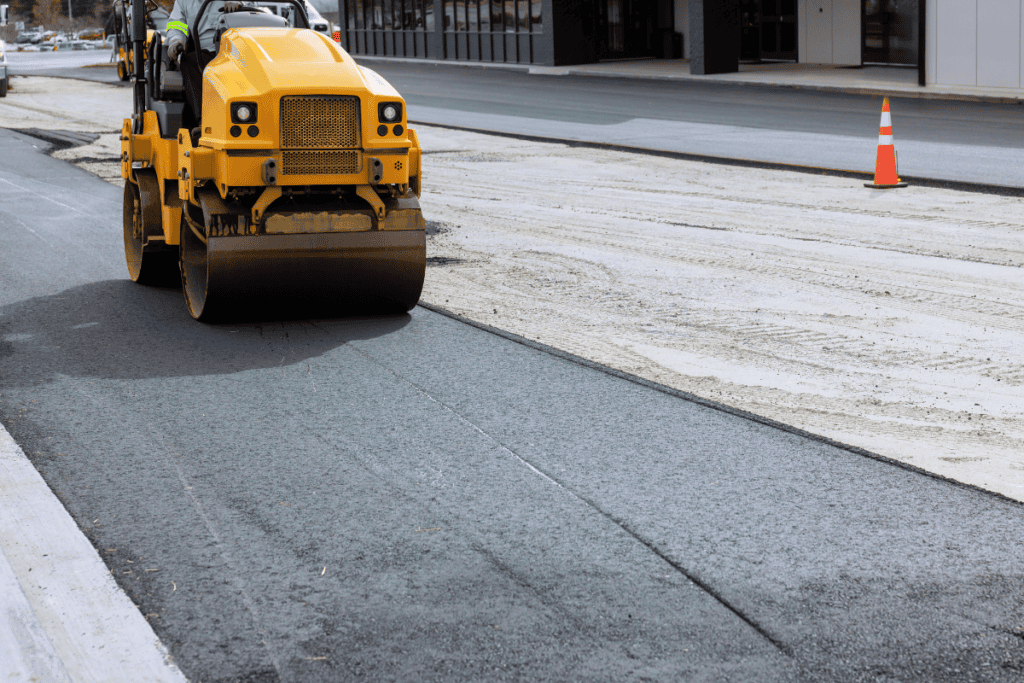
Mill and overlay is a surface-level repair method. Crews use specialized equipment to remove the top layer of asphalt. This milling process eliminates surface imperfections such as shallow cracks or uneven areas. After milling, a new layer of asphalt is installed over the prepared surface.
This method improves appearance and ride quality without disturbing the base layer beneath the pavement. It is often used when the foundation is still stable and capable of supporting traffic.
When Mill and Overlay Makes Sense
Mill and overlay is typically appropriate when damage is limited to the surface. If the pavement shows minor cracking, light rutting, or cosmetic wear, this method can restore performance without the cost of a full rebuild. It also works well for properties that need a faster turnaround time since the process is less invasive than deeper reconstruction.
However, if underlying base failure exists, milling alone will not solve the root problem. In those cases, surface improvements should not be made as they will be short lived.
Understanding Full-Depth Reclamation
Full-depth reclamation addresses deeper structural issues. Instead of removing only the surface layer, this process pulverizes the entire asphalt section along with a portion of the base material. The reclaimed material is blended, compacted, and stabilized to create a stronger foundation. A new asphalt surface is then installed on top.
Because it rebuilds the pavement structure from the base up, full-depth reclamation is considered a more comprehensive solution.
When Full-Depth Reclamation Is Needed
This method is often recommended when pavement shows widespread cracking, severe
rutting or visible settlement. These signs typically indicate that the base layer has deteriorated. Simply placing new asphalt on top would not correct the underlying weakness.
Although full-depth reclamation requires more time and a higher initial investment, it can significantly extend pavement life. It also reuses much of the existing material, which reduces waste and supports efficient construction practices.
Key Factors in the Decision
The decision between mill and overlay and full-depth reclamation should begin with a professional pavement evaluation. The most important factor is the condition of the base. If the foundation remains sound, surface milling may be sufficient. If structural failure is present, deeper reconstruction is often the better long-term solution.
Budget and long-term property goals should also be taken into consideration. Mill and overlay typically costs less upfront and can be completed quickly. Full-depth reclamation costs more initially but may reduce future repair cycles and long-term maintenance expenses.
Traffic load is another consideration. Properties with heavy truck traffic or frequent loading activity may benefit from the added strength that full-depth reclamation provides.
Partner with DCPS for the Right Pavement Solution
Choosing the right pavement repair method can impact your property’s performance and long-term costs. An experienced contractor can assess current conditions, identify underlying issues, and recommend a practical path forward. DCPS works closely with commercial property managers to deliver dependable asphalt solutions backed by strong customer service. If your parking lot or paved surfaces are showing signs of wear,
contact DCPS today to schedule an evaluation and discuss the best next steps for your property.